Introduction
India has moved really quickly in the mobile space in the past ten years. We hardly used phones for anything but basic browsing, calling and texting 10 years back. Not so anymore. There is an app for everything. Smartphone penetration has been aggressive, thanks to competitive players ranging from Apple and Samsung to Xiaomi and Micromax. And, smart phones are getting bigger, faster and better day by day. Naturally, new apps have been built for many we used do in other physical ways.
When I got introduced to the concept of Mobile Wallets, NFC based payments etc, I absolutely loved it and fancied carrying just my phone everywhere not having to bother with wallet. That has hardly happened though, because any radical change is tough, more so if it has anything to do with money. Many urban smartphone users have come to trust Mobile Wallets now, however, not a whole lot has changed on the merchants side yet. There is still huge number of merchants who simply won’t fiddle with their payment channels. They prefer cash for a variety of reasons and wouldn’t even try plastic payments and other e-payments.
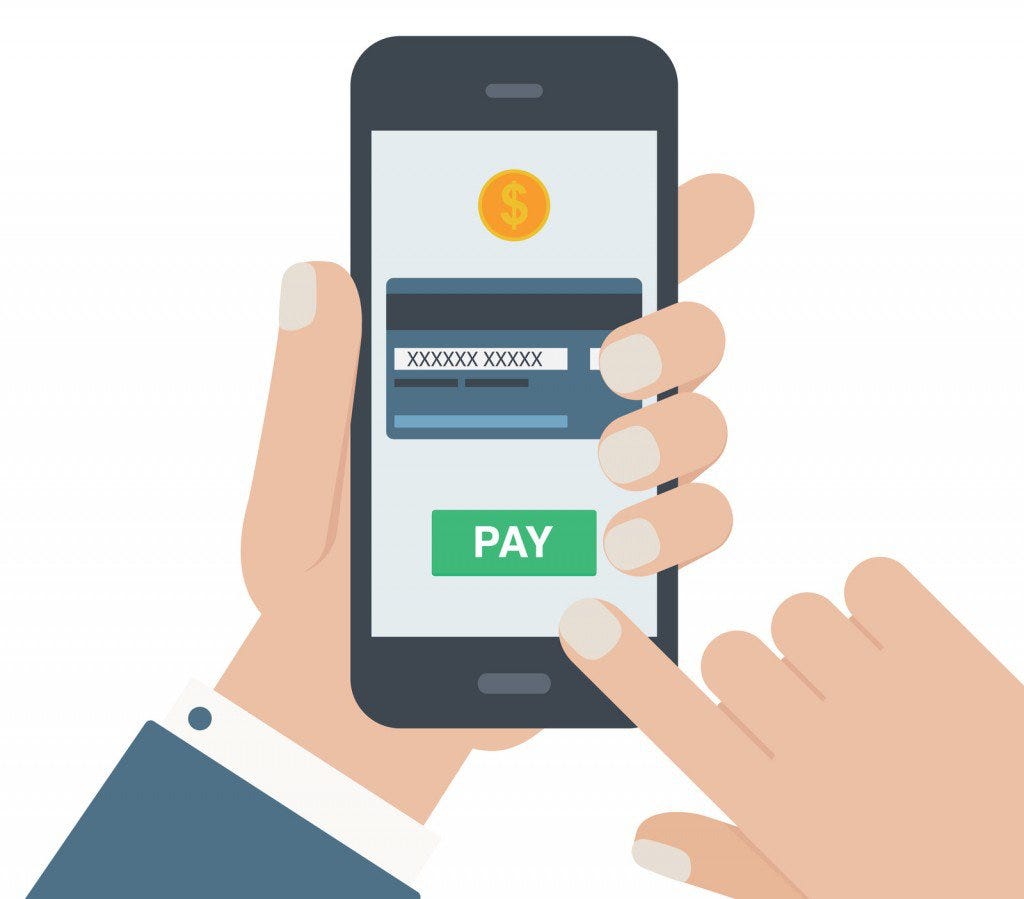
Players like Paytm, MobiKwik, Freecharge, Phonepe and many more have done a great job in disrupting this market over past 4–5 years. Paytm had just started to establish itself as undisputed kind and then UPI came along in mid 2016. That was followed by demonetisation.
Evolution of Mobile Wallets
Mobile Wallets have come a long way since their introduction in India. The overall download metrics would be around 100million for the top 10 players. The leader Paytm is handling millions of transactions every day. However, this is still far lesser than what the plastic cards and other electronic means witness. Also, the electronic methods of payments, including plastic cards has penetrated only about 50–60% of the target market in the country.
Assuming about 70mil of the downloads are in urban region and with about 350mil being the urban population, mobile wallets seem to be at early majority stage. There is quirk however. Some of the merchants seem to be increasingly frustrated with the lack of transparency with players like Paytm, and want to discourage wallet payments when they can. This will prove to be death trap unless addressed with utmost care, especially with serious competition coming from the government itself.
Rural market is a whole different ball game, though. Here, the although we claim 3G/4G penetration, the reality is poor connectivity and low awareness. Adoption definitely has not been very high. Payers are not comfortable using these apps, nor are the merchants meddling their payment methods. Apart from a few innovators, who use the apps for bill payments, not much has moved.
Growth hacks used so far
Most of the players seem to have taken similar paths. Although payments and wallet are at the core of the offerings, there are a slew of e commerce integrations which enable them to gather commission revenue on purchases. However, there have been complaints about poor quality of service on product delivery, returns etc with most players.
The most common way is to provide promotional offers to lure users into buying and hence use the wallet services as well. This is unlikely to work in the long run because of sustainability issues the such long running promotions bring along.
Most players have also been aggressive with integration with other service providers, which is a more organic way of growing.
Marketing also has been a key component for many players.
Referral schemes with cashbacks are another common technique being employed.
User Profiles
The needs of urban and rural market are very diverse, so it would be short sighted to expect a single set of user profiles work for both markets. Since we are still grappling with urban market, I see the segmentation to be as below:
Innovators — The technologically open minded folks. Mostly young software professionals of various kind, and other non-techies who experiment with novel ideas.
Early Adopters — These folks are adopting based on need. Their primary use cases are to pay bills, make payments at local merchants to avoid the change problem, and to catch on to some of the promotional offers.
Early Majority —Promotional offers to lure users is a risky move by the firms, because the euphoria of the early majority who are focusing on short term benefits will be short lived, unless the app gives superior experience compared to all other means of transaction. Users in this segment may face more challenges because they adopt the product for the claims of ease of use, acceptance at various venues (apart from promos of course) etc while their favourite local merchants don’t want to support Mobile Wallet for reasons ranging from complexity to tax theft!
Late Majority — We are far from reaching here. This would be everyone with smartphones who start to use Wallets because merchants start preferring this method too and Mobile Wallets are the only method you would need anywhere. They will wait for the products to stand the test of time before switching.
Laggards — These are the users who sign up when there are no other alternatives.
Will they ever reach such penetration levels, or will all this end soon?
Apart from a crowded and competitive market there is serious challenge by the substitute called The Government. GoI introduced UPI in mid 2016 and gave Paytm and others a scare. And then monetisation happened stressing the need for Wallet based payments. While Paytm saw tremendous inflow of users and transactions during the dry days, the euphoria soon settled down to reality. The merchants still look at it as a complicated and expensive option in certain scenarios. For example, if I buy Rs. 20 milk which has 1Re margin, merchant claims Paytm charges him 1.2% commission and refuses to accept it. Unless convenience is all over each transaction, this will not likely change. To me, the power of mWallets lies in how quick and hassle free the transaction in the shop can be. The same must be the case for merchants as well, for this to work.
The most serious challenger however, is a large one — the Indian Government. The UPI platform is a strong move by the Government to provide an alternative for plastic cards, as well as mWallets. The BHIM app which utilises this is simple and serves the purpose nicely. There are also other apps who are embracing UPI. Advantage is, your bank account becomes your wallet and being Government operated, it will be cheaper to transact on. What all this means is, if Government decides to invest and back this initiative in the long run, all other wallets may become irrelevant.
There is ray of hope, still. Paytm is on the cusp of becoming a legal alternative to banks, and start offering interest on the wallet balance. This will level the battle field and whoever gives the best user experience and variety of service at the most reasonable cost will win.
How do various payment methods stack against each other?
These are the main methods as of today:
Cash/Physical banking — The de facto method of payment. Even after demonetisation. The liquidity is back, and we are back at square one for most day to day transaction.
Internet banking — This is used by a very small percentage of the market. Even today, there are only 700mil bank accounts in India, and not all of them are internet ready.
Plastic Cards — We are seeing better penetration now, however, rural market still has not migrated to active usage for day to day transactions.
UPI/Mobile Wallets — This is going to be the future, however the time has not yet come. The internet based methods are not going to work in rural India yet. Till then, there is a need for easy to use methods that are applicable on brick phones too. No, USSD method supported by UPI is not easy to use at all.
It’s important to note one edge of Mobile Wallets over UPI is the risk of losing money is lower in the former, since you don’t leave all your savings exposed to the security threats. UPI may solve this by integrating some upper limits in the future though. UPI also has the advantage of direct access to Aadhar information, hence biometric POS payments are a very practical possibility. This will surely hurt the rest of the players in terms of simplicity of usage.
Summary
The Mobile Wallet/Payments/Banks industries are going through uncertain times. In the long run I would expect the differences to blur between these entities. Mobile Wallets will provide interest on the balance and allow seamless payments, so will the banks. UPI can sit as an umbrella for all kinds of payments, thanks to potentially lower cuts. Key factors for success of the overall industry are internet penetration, simpler workflows (e.g., biometric payments), better/simpler commission models for merchants, interoperability and security. While UPI seems to have the edge because of its sharp focus, it really is anybody’s game.
 Thought Farming